



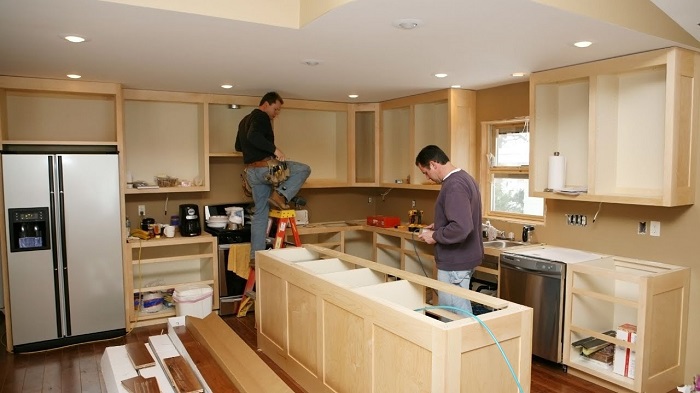
14 Mar Kitchen renovation from planning and costing to materials and mistakes
A kitchen renovation is a project where design, engineering, and a family’s daily habits intersect. Planning errors quickly turn into inconveniences: insufficient electrical outlets, cramped walkways, poor lighting, or materials that are difficult to clean.
To ensure a renovation without unnecessary expenses and rework, it’s important to define your goals, budget, and workflow in advance. Below are practical guidelines to help make your kitchen convenient, durable, and logical. You can contact the professionals from kitchen remodeling Edmonton.
Materials, Appliances, and Practical Solutions
Facades. Choose finishes that are resistant to moisture and frequent cleaning. Matte surfaces are less likely to show fingerprints, but some textures are more difficult to remove grease—check a sample first.
Countertops. Heat resistance, impact resistance, and repairability are important. Check how the material handles heat, dyes (tea, coffee, beetroot), and abrasives. In the sink area, consider edge protection and high-quality sealing.
Apron. It should withstand steam and splashes. The fewer joints, the easier it is to clean. If tile, choose stain-resistant grout.
Lighting and Electrical
A single chandelier on the ceiling rarely solves the problem. Combine:
- General lighting for uniform illumination;
- Work area lighting under upper cabinets;
- Accent lighting (display cabinets, niche, plinth lighting) if desired.
You usually need more outlets than you think: for small appliances, chargers, lighting, a range hood, and a dishwasher. Install separate lines for high-power appliances and consider access to circuit breakers and connections.
Ventilation and Exhaust Hood
Exhaust hood efficiency depends not only on its power but also on proper ductwork: minimal turns, sufficient diameter, and tight connections. If the hood is connected to a shaft, check the draft and provide adequate airflow (otherwise, efficiency decreases and odors linger).
The work sequence most often looks like this: design and estimate > demolition > rough electrical/plumbing/ventilation > leveling walls and floors > final finishing > kitchen and appliance installation > connection and setup. This order reduces the risk of damaging new surfaces and facilitates quality control.
If you’re planning a renovation in a specific city and are looking for contractors, compare quotes on details: scope of work, materials, warranty, deadlines, and transparency of estimates. A search for “kitchen remodeling Edmonton” will help you find local options, but it’s best to make a final choice after reviewing the portfolio and contract terms.
Measure the room and connect utilities before you start
Accurate kitchen measurements and proper connection of utilities are essential for planning a comfortable kitchen, selecting appliances, and avoiding rework. Even a few millimeters of error can disrupt the installation of countertops, cabinet doors, and built-in units.
Before starting work, it’s important to record the actual dimensions of the room after demolition and assess the feasible locations for water, sewer, ventilation, and electrical wiring. It’s best to include all the data in a single plan and coordinate it with the contractors before purchasing furniture and materials.
Measurement and Utilities Checklist
- Room Geometry: length of each wall, diagonals (to check squareness), floor-to-ceiling height at several points, differences in floor and ceiling height.
- Openings: doorway dimensions, opening direction, distance from corners to frame/slopes, overhangs and niches.
- Windows and Radiators: window width/height, window sill height, window sill overhang, radiator location and dimensions, distances to the floor and walls.
- Gas (if any): pipe and faucet position, permissible distances, relocation only by agreement, access to shut-off valves.
- Take measurements after Dismantling and mark all protrusions, frames, risers, and uneven areas.
- Check critical areas: corner units, space for the refrigerator, dishwasher, oven, walkways, and door openings.
- Record the results with photos and a diagram so any contractor can verify them on-site.
Bottom line: Taking measurements and connecting utility lines is the final check of the future kitchen’s logic and the key to the precise installation of furniture and appliances. The more detailed you record the dimensions and connection points before starting, the fewer unplanned expenses, delays, and compromises in convenience you’ll avoid.
No Comments